


What happens when you step away from work to find out who you are without it? A reflection on identity, capitalism, and the courage to pause.
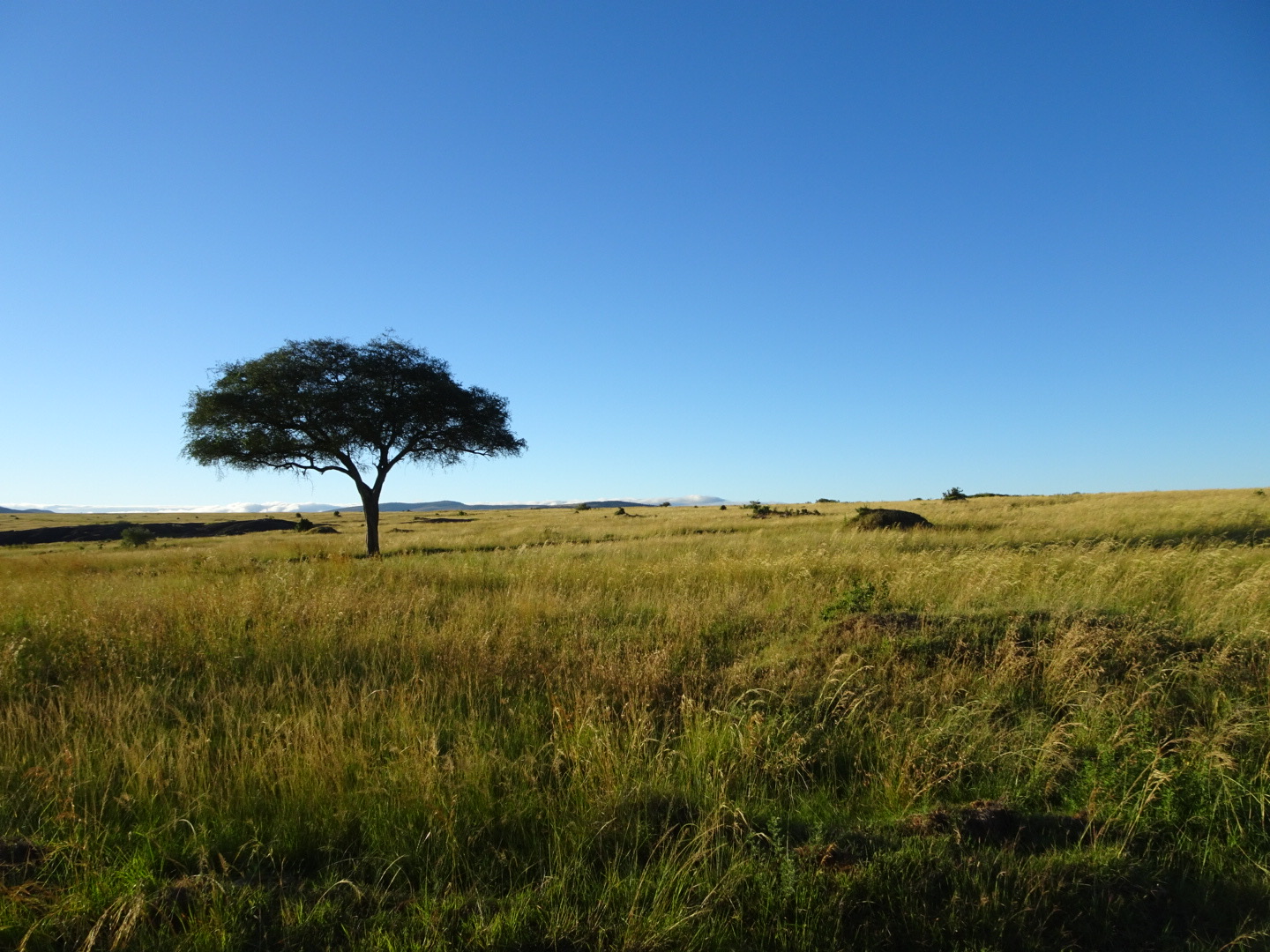
Beautiful African morning, where I stood still before the vastness, the beauty, the freedom and let myself be found.
In a society that values work as sacredly as Christianity reveres the Holy Grail, it’s not surprising that many of us define ourselves by what we do, not who we are. When passion is also part of the game, it’s only a guarantee that most of us will define our sense of self through our profession. It shows in how we answer the question “What do you do?” The instinctive response: I’m a teacher” or “I’m a banker” — actively collapsing a being into what was only ever asked as a doing. There’s something profound about how narrative shapes identity, especially when that narrative becomes the lens through which we see ourselves.
Work is an important part of life, if only because of the financial needs it meets and the social function it plays. It is a vital component of survival, especially in the capitalist age we live in. Research often highlights that the average person spends about a third of their life working (around 90,000 hours). This staggering figure makes one wonder: how can our daily occupation not define us when it demands so much of our time?
For many, it is also synonymous with religion, given the devotion with which some worship their work. After all, it’s where most of us look for meaning and purpose – at least from 9 to 5. For some, it goes way beyond that time window, because, in truth, companies are no longer vying for our time – they own it, as evidenced by LinkedIn’s popularity. Research published in the Harvard Business Review even shows that a significant number of people are willing to give up monetary compensation in exchange for meaningful work.
So what becomes of us if work defines us? Whilst work is important to sustain a living, what happens to the person within? Do we get to exist as actual individuals, independently of the daily grind? And most importantly, why does a career get to define the person within? Are we that afraid to pause for a moment to get to know ourselves?
As the daughter of uneducated immigrants, I grew up with a sense of self tied to how hard I had to study and then work. My dad, raised in the traumatic conditions of colonial Algeria, was brought up to see work as synonymous with survival. He saw work as a path to integration and stability in a country that would become his home – a mindset I absorbed and lived out from the moment I started working at nineteen. That culture of industriousness was instinctively inherited and carried with me throughout my life. It became even stronger as a message because, as I grew up, my background meant I had to work extra hard to prove I was “worthy” of being considered for a job, just as someone with native French parents is. So, after so many years of being shown and told that work was the way to “be someone”, it eventually became the core of my identity.
Over the years, work became who I was for most of my adult life. Until 8 years ago, when I decided to shatter this lifelong principle by taking a break from work. After spending over 15 years working, many of them in the least mentally healthy environments, I took time off. I took this giant leap into the unknown, despite a constant sense of fear, the stigma associated with unemployment, and the fear that finding a job while unemployed might be more difficult. I stopped working.
The first few weeks that followed were the most nerve-racking I had ever experienced; for the first time in my adult life, I no longer had a regular income to support myself and used my savings as my financial cushion. I lost my identity in the process; if working was who I was, not working meant I had, in effect, lost myself. To find out who I was was only part of it – existing as this person in a capitalist and judgmental society was another feat I wasn’t prepared for. Little did I know that being in social surroundings would make things even more challenging. I was living in Dubai at the time, a place where the constant grind is not only the name of the game but also the way one is allowed to remain in the country through employer sponsorship (officially, at least). Another subtle way to tie one’s existence to a job.
One instance that has stuck with me to this day was during a Ramadan evening at a Suhoor event. A friend of mine invited me to join her and didn’t fail to give a heads-up: the event would be filled with career-driven, successful women, spanning the banking sector to fashion entrepreneurs. I only realised later that it was a full-on networking evening, and whilst my friend forewarned me, I genuinely didn’t think people would still be networking that hard, that late in the evening, during a month that was sacred, no less. Just in case I needed any additional proof that work defines people.
As is customary in such settings, a round table was de rigueur. When my turn came to introduce myself, a wave of anxiety swept through me, the kind that hits when you feel you’ve done something wrong. Or maybe it was just plain shame. I muttered my name, followed by “I’m currently on a career break,” with the hesitation and fear of judgment we feel when we break social norms. I was surrounded by a slew of high-achieving women, and there I was: unemployed – by choice. No longer the regional manager at a globally established publishing house. Just me, a woman navigating an identity crisis.
Whilst I was met with a mixed pool of reactions, some did not lie. I dare say that disdain made an appearance at that very fancy table. Because, surprisingly enough, work and the value attached to it transcend many cultures and geographies. And the stigma associated with unemployment? Very much alive and well, as suggested by empirical evidence, and some of the reactions I witnessed that night.
But my unemployed status sparked curiosity, and questions poured in: “What do you do all day?” “When will you look for a job again?” “Do you have a husband supporting you?” For context, in that part of the world, someone who doesn’t work is usually a wife with children – another form of identity. I was neither employed, nor married, nor a mother. It felt like my unemployed status had made me either a circus act or a criminal being interrogated, both extraordinary situations, when unemployment shouldn’t warrant such intense scrutiny.
What I didn’t expect was a pleasant surprise from some of my fellow tablemates. Some were impressed that I had made the decision to become a “lady of leisure”, as one woman put it, on my own, without the support of a third party, be it a husband or family. Except that it wasn’t exactly that; I still needed to earn a living, but I voluntarily chose unemployment so I could figure out who I was, which I knew was impossible to do if I remained in the same environments that not only erased the person I was but also enabled the constant mental strain.
For a while, I was able to detach myself from all these years of work, and perhaps some of the positive reactions that Ramadan evening brought helped. It’s only later that I understood what the woman meant by lady of leisure. For me, it meant choosing to discover who I was, as a person, not a job. It also meant becoming aware of how deeply internalised capitalism was. It took some time, though, and was anything but easy. Being in situations where control is fleeting surely tested the chronic anxiety within.
That time allowed me to learn to tame my fear of the unknown and sit with it instead of pushing it away, aided by regular therapy. To focus on whether I liked my personality and who I really was, without a profession. To really look around me with a calmer mind and delve into the soul-searching needed to appreciate life in all its forms, but most importantly, the person within. To go beyond the familiarity of starting the day with the same decades-old routine and make up a new one that didn’t involve absorbing the stress associated with going to work, but instead went on solo travelling adventures, near and far. To be curious about the guilt that arose whenever I chose to go grab a coffee on a Tuesday afternoon or spend the day at the beach on a Wednesday when everyone else was working. To sit with the fear and unease that comes with unlearning a lifelong habit of devoting my time to a job, and to have no monthly financial sustenance land in my bank account, which was the hardest part.
But my most ‘prized possession’, besides the acquired joy of soul-searching, had to be learning the art of surrendering. To metaphorically float with the current rather than swim against it, and to know that I’ll eventually reach the safety of the shore, almost unscathed. Stronger in spirit, with the solid conviction that curveballs, even the self-thrown ones, can be signs that deviating from a path we thought was forged can result in many unexpected wins. This time, quite literally, meant focusing my energy on learning to think differently, to view the world through a new set of lenses, and to rewire my brain to lead a life with a fresher narrative, one that is not unexamined. It wasn’t easy every day, but the mere act of consistently trying changed things forever. I understood that the time I didn’t spend thinking about or stressing over work opened new pathways of thought.
Eight years – a return to Europe and a burnout – later, I find myself in a similar situation: no longer employed, this time by force rather than by choice. Redundancy is a daunting process and can easily make one feel less than, especially when one’s identity is tied to one’s profession. Whilst it wasn’t easy to process, I am glad that my choice all these years ago helped make this recent experience more surmountable and helped me see things in a more positive light than I would have had my identity still been tied to what I did for a living. My previous experience greatly helped me navigate this round of forced unemployment, leaving me wiser and calmer than I might have been had this been my very first.
These phases of not working allowed me to find my identity, the same one that had been hijacked by work for all these years. That same hijacking, enabled and pushed by society and the stigma it’s paraded for decades (regardless of where one is in the world). The stigma emanating from the labour market attached to unemployed people, and the one coming from society, as witnessed that Ramadan evening and more recently here in France. The same stigma that can make you feel so inadequate for not having a job, and that can be hard to ignore sometimes and will linger for some time if you let it. At times, it can feel like the world is against you because most people work, and you don’t. And it’s no exaggeration to say that people view your worth as lessened because work isn’t part of your everyday routine. That’s how it feels, at least.
My upbringing and the environment of my formative years may have instilled in me a sense of hard work as a personality trait, but society and its stigmas kept it alive. The guilt we feel when, voluntarily or not, we aren’t working while others are is a feeling that should be replaced by the acceptance that not working isn’t the be-all and end-all of life, and is a temporary period that allows life to be seen and experienced differently. There are many other ways to be productive that don’t involve spending every waking moment thinking about work or doing work-related things. Freeing one’s mind in this way allows new thoughts to emerge and the ongoing process of neuroplasticity to take place.
In a world that makes it easy to identify as a sales director or a chef, and nearly impossible to assert ourselves through the traits that actually make us who we are, maybe it’s time to reclaim what we’ve been taught to call ‘soft skills.’ Empathy, emotional intelligence, critical thinking – these aren’t just functional requirements for a job. They’re the building blocks of personality, the core of who we are as people. They deserve to come first.
Far be it from me to imply or state that work is either penance or an evil thing; it is everything but. Some are very lucky to find joy in their work and identify as such, just as I once did, and that’s what’s important. To find joy – and yourself – in your daily occupation is a wonderful thing. What is implied, rather, is simply putting work back where it belongs. A job is something that enables a living, and whilst it is important, it shouldn’t be one’s sole identity, and perhaps the search for meaning through work should remain an abstract one. Especially when work so often has negative consequences for our mental well-being.
Idleness isn’t the point either, nor is it what is being promoted here. It is simply a way to give priority to what matters, or more importantly, to who matters; the person within who deserves to exist beyond the job title. Might we shift the energy and focus we devote to finding purpose at work towards a search for greater meaning in life, and, most importantly, muster the courage to befriend the person within? That is my yearning hope.
Thank you for reading. I’d love to hear if this resonated with you, and please share it with anyone who might need this reminder that we’re so much more than what we do. And if you’re interested in further exploring how we navigate the pressure to conform, you might enjoy my essay on what a lifetime of not drinking taught me about belonging.
 Life
Life