


I've spent 43 years navigating a world that treats "I don't drink" as a problem to solve. I'm still trying to understand why that bothers people more than it bothers me.
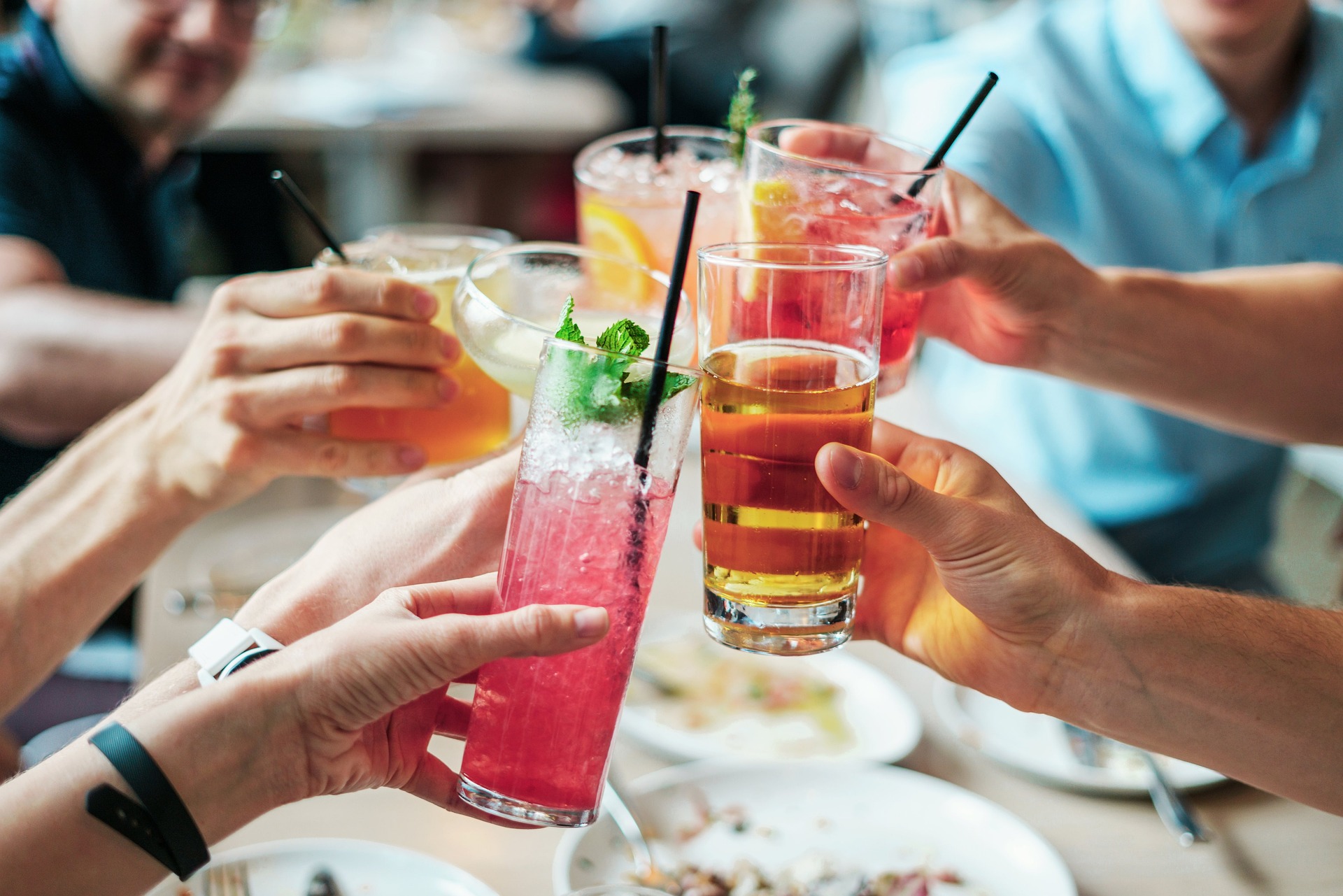
Image by bridgesward from Pixabay
“I need a drink”. Four words that carry weight. They can mean as little as wanting relaxation, enjoyment, or relief, or as much as wanting to belong in a world that has decreed alcohol the only acceptable choice. As someone who doesn’t drink and never has, I’ve tried to understand what these words actually mean – what people are reaching for when they say them, and the subtext behind these four words. A phrase so powerful it became a lifetime fascination: the social construct of drinking alcohol.
I was born and raised in a small town in the then-administratively called Champagne-Ardennes region, the birthplace of Moët & Chandon and Veuve Clicquot – two brands that make up half of LVMH, the luxury conglomerate where champagne (and other spirits) holds equal weight with couture. A short thirty minutes away were unmistakable landscapes filled with endless grapevines, as far as the eye could see. As a teenager saving for my driver’s licence, I took on a rather arduous seasonal job harvesting the grapes that made the very drink I would never taste. My back, legs and hands screamed through a week-long period of pain – pain so acute it made me swear this would be my first and only time in the labour of making bubbles while covered in dirt.
To take the irony further, when I left France for the UK on the eve of my twenties, my family moved to the other sacrosanct wine region of France: Bordeaux. It was purely coincidental – as was my birth in the Champagne region; we had relatives there, and my parents’ advancing age meant that having everyone living nearby was the better option. So, living in and having ties to two of the most well-known French capitals of alcohol only made my story even more ironic, particularly whenever I was asked “where are you from” in social settings, which was almost always followed by a stupefied “wait – and you don’t drink?!”
My Muslim background made it self-evident that a life of sobriety was the path to follow – and it’s always been a chosen and contented one. It never occurred to me to veer from it, despite living in a society that tempts and often pressures you at every turn to taste the forbidden fruit. Have I wondered what it tastes like? Sure. The same way you might wonder about anything you’ve never tried. But wondering isn’t the same as wanting, and I’ve never felt like I’m missing something essential, except, perhaps, the social ease that seems to come automatically with a glass in hand. Especially growing up in France, where wine is so sacred that, not that long ago, producing de-alcoholised wine was considered heresy. When the owner of Château Clos de Bouëard, in the Bordeaux region, created a non-alcoholic wine seven years ago at the request of PSG’s Qatari owners, she admitted that, at first, she was viewed with suspicion and faced every kind of criticism for her decision to enter the de-alcoholised wine market. Despite the product’s eventual success, the initial reception revealed how deeply wine culture polices its boundaries.
It turns out these boundaries aren’t specific to France; they extend well beyond its culture and physical borders. Wine is only one reference in the lexicon of consumable ethanol. It is an unspoken rule that social acceptance hinges greatly on one’s willingness and ability to ingest any kind of alcohol; alcoholic beverages are synonymous with belonging, and in many cases, they are social proof that one can integrate into a group. At least that’s what my experience has shown over the years.
As a mature graduate student, I was often puzzled by how my classmates, much younger, would omit me from their after-class social gatherings. At first, I thought it was age-related, but getting along well in class made me wonder whether that was all there was to it. One of them once awkwardly admitted to me that he didn’t think I would want to join because I don’t drink alcohol, so he preferred not to include me at all. While this didn’t surprise me as much as it did puzzle me, it still proved something unequivocal; social rejection wasn’t just chosen for me; my voluntary abstinence was framed as a deficiency I needed to overcome to be accepted.
If we take social acceptance to include the workplace, things get worse. The same abstinence was, this time, in the way of my career prospects when I was once assigned to a new manager following a company merger. During a social outing to get to know the new team at a rather animated cocktail bar, my then-new manager asked the inevitable “Do you drink?” question. My answer, the same as it’s always been, elicited an unexpected reaction that baffled me. He looked at me with a rictus smile and replied, “You know that it’ll be difficult for you to get promoted if you don’t drink… a lot of important conversations happen outside the office, around a drink”. To which I responded that virgin mojitos and Shirley Temples were served in bars, and I was open to socialising after work to discuss work. “It’s not the same as an actual drink,” he said. I had never heard it this blatantly before – I didn’t know whether to be impressed by the frankness on display or disturbed by it. The fact that this took place in Dubai, a non-Western society where alcohol consumption was limited to specific places by decree, turned this into a satirical joke, making evident that the corporate world still bows to the culture of drinking even in a Muslim-majority region.
Looking at these encounters through a scientific lens, his reaction seems to be the norm. Less forthright, granted, but insidiously common. My Dubai boss was merely stating documented reality; according to peer-reviewed research, not drinking limits career advancement. This goes even further; research shows that drinkers earn 10-14% more than those who abstain, with men who drink socially earning a 7% premium. And to further the data with a twist I wasn’t expecting, female drinkers earn 11% more than female abstainers. As if general peer pressure in social settings wasn’t enough, non-drinkers are paying a steep price of admission by forgoing career and financial prospects.
Thankfully, sobriety has a better overall health outcome. But society’s price of admission is all too clear: measurable brain shrinkage – starting at just one drink a day – and increased risks of cancer, gut inflammation and cardiovascular disease. The latter has been the subject of recent research that debunks the “red wine is good for your heart” narrative that has justified decades of drinking. It appears that moderate wine drinkers had healthier lifestyles, which was the confounding factor all along. The “heart-healthy” wine drinker was simply someone who exercised more, ate better, and smoked less, not someone benefiting from alcohol. Society has been celebrating the wrong variable all along, while vehemently excluding the “healthy by choice” demographic.
This paradox isn’t new. France has criminalised public drunkenness since 1871, yet defines no threshold for what constitutes being “drunk” – and it gets better; the country’s own law designed to forbid alcohol advertising conveniently exempts wine if it’s tied to cultural heritage. France is not alone in this legislative gaslighting. Britain collects £12.5 billion in alcohol taxes while technically criminalising public drunkenness – a law I saw enforced approximately never in ten years of living there, despite walking past my fair share of Friday-night pavement vomit. In the US, some states don’t require you to be intoxicated – you simply have to appear so. But in every case, the message is identical: give us your money and your health, but do not dare show us the cost.
With alcohol seemingly society’s raison d’être, I’ve sometimes wondered whether my mere existence – sober, unbothered, absolutely fine – is simply inconvenient to most people on the other side of the drinking continuum. I’ve wondered whether my Dubai boss’ reaction, my classmates’ chosen rejection, and all the other times when I chose Shirley Temple over a Hemingway Special were merely unintended mirrors people are uncomfortable with… the discomfort of being reminded that I am choosing the path of self-acceptance without seeking approval through alcohol?
To understand what I’ve never been able to access – what people are actually reaching for – I asked a dear friend of mine, two years sober, about life on both sides. What I heard was an education – and a confirmation of what I’d long suspected. Namely, the assumption that not drinking somehow reflects on friends and family. “I’m not tempted by alcohol in the slightest,” he told me, ‘but they assume I can’t be near it.” And the closer the people, the harder it gets; “…after 2 years, some people (mostly immediate family and partner) have a harder time accepting it as it conflicts with their own needs.” And the needs remain untold, left to be reckoned with – we’re never told what those needs are. We’re just expected to accommodate them – to manage a discomfort we didn’t create, maybe to soften a reflection they’d rather not see. What struck me about my friend’s testimony was his choice of word: drug. “Alcohol is the only drug in the UK which shocks if unused,” he said. He’s right. And navigating that shock is exhausting – as he puts it, stealth sobriety becomes a skill. As he shared these thoughts with me, there was one thing we undeniably agreed on: people get boring when they’re drunk!
Despite society’s peer pressure and the reflection it resents, not everyone drinks with alacrity – some people simply don’t care whether you do or not, and accept you as you are. I’m lucky to be surrounded by many of these people. Many true friends, drinkers and abstainers alike, for whom no cover charge applies. Or ever did. They embrace the non-booze-guzzling person and even introduce you to non-alcoholic wine in restaurants in Amsterdam, lovingly explaining the difference in taste between the “real” version and the one in my glass – and later bring bottles of it on a visit to Paris, just because. Some make sure there is non-alcoholic beer when invited to dinner in London. Or the ones that will endearingly ask if I’m OK with them ordering alcohol while dining in Dubai.
The life lesson is that my choice not to drink may lead some to think I am less fun, less trustworthy, and less deserving of professional opportunities. I accept and live with that. What I have stopped feeling, though, is the weight of other people’s assumptions about that choice, the unspoken judgment that abstinence must mean deprivation, that I must be quietly suffering through social occasions, white-knuckling my way through life. I’m not. I’m just here with different drinks, wondering why that requires an explanation at all. And my lifelong interrogation will remain firmly rooted in existential curiosity; why is my permanent abstinence treated as antisocial, when temporary abstinence, such as Dry January, is encouraged and celebrated? Perhaps Dry January participants will return to drinking on February first, validated by their month-long discipline, or maybe they will springboard into better health by coming to our side of the mirror, as my friend did two years ago. Nevertheless, I’ll still be here – sober, unbothered, absolutely fine – ginger beer in hand, still wondering what people are really reaching for when they say “I need a drink”.
Thank you for reading. Whether you’re sober, sober-curious, questioning the rules or just perfectly happy with your Hemingway Special – no judgment here, I’d love to hear your story! And if this piece made you pause, that’s okay, too. Support is always available if you need it.
And if this exploration of belonging resonated with you, you might also find peace in my essay on reclaiming your identity beyond your job title
 Life
Life